
Tennis video analysis that shows you the stroke, frame by frame
You already train and compete — in juniors, on a high school team, or in college. What video gives you is the truth about your strokes: where your toss drifts, whether your contact point creeps back, why your second serve sits up. Film from behind the baseline, and a 2ndLook tennis coach draws on your video frame by frame and gives you video feedback and advice to take to your next session. Young players who build correct form early keep improving for years — raw talent alone plateaus, technique compounds.
How it works
Film from behind the baseline
Prop your phone on the fence behind you — the classic coaching angle — and record serves, rally balls, or fed drills at normal speed. Your coach handles the frame-by-frame breakdown.
Your coach draws on it
Your coach goes through your footage frame by frame, drawing contact points, toss position, and swing checkpoints directly on the video, and gives you video feedback and advice on the fixes in priority order.
Watch, drill, and level up
Your review lands within 72 hours and stays in your account to rewatch courtside. Work the drills, film the same strokes again, and watch the checkpoints move.
What a tennis review covers
Your coach reviews the strokes you send against the checkpoints competitive players are graded on.
Serve: toss, trophy, pronation
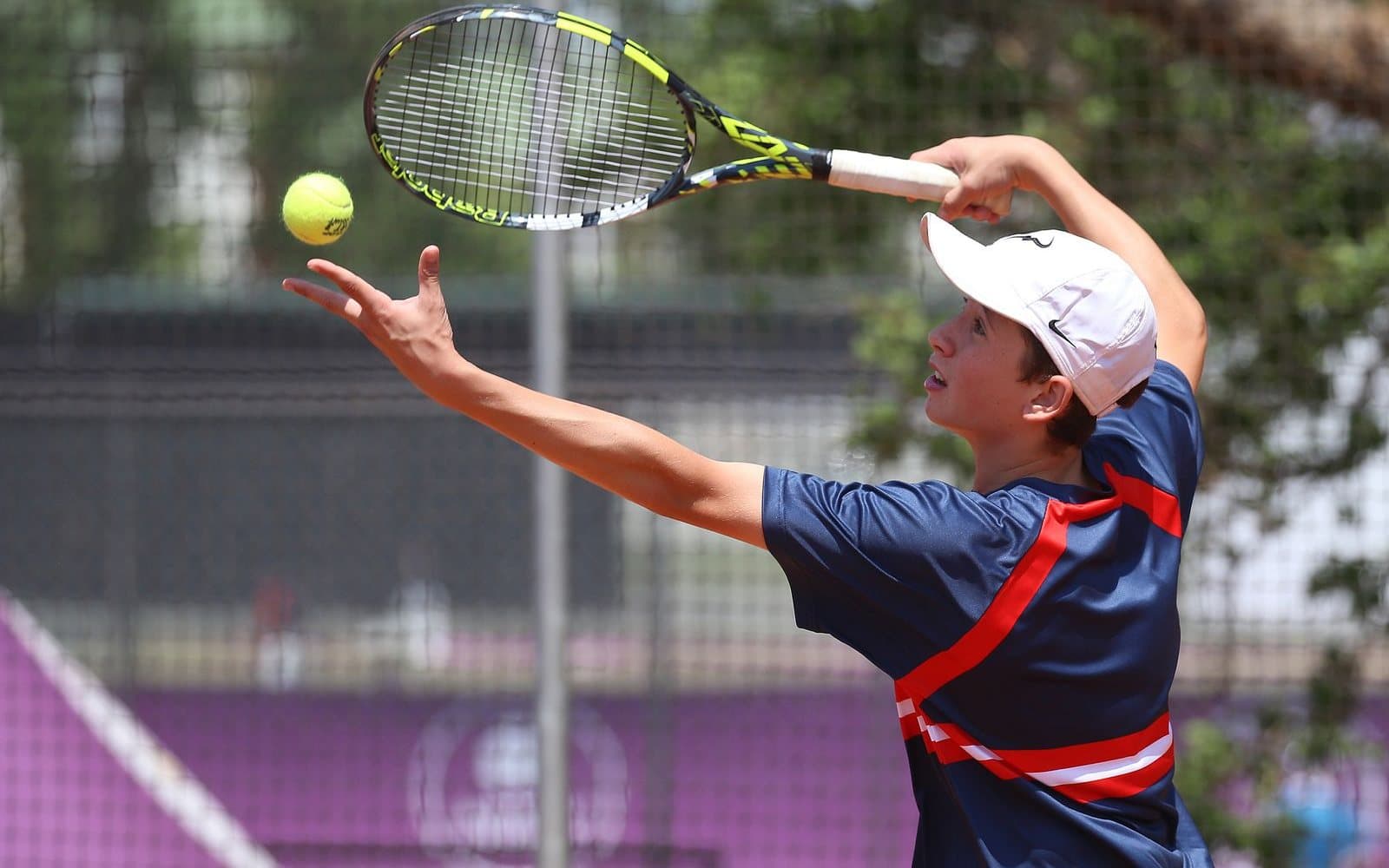
The serve is the most coachable shot in tennis. Reviews cover toss placement and consistency, trophy position, leg drive, racket drop, pronation through contact, and your landing — the full chain, frame by frame.
Forehand
Unit turn, spacing, contact point out in front, and follow-through. Your coach shows whether your forehand breaks down from preparation, spacing, or swing path — they look similar at full speed and are completely different fixes.
Backhand: one hand or two
Shoulder turn, contact in front, and stability through the hitting zone. Whether you hit with one hand or two, your coach checks the positions that keep the backhand from becoming the side opponents pick on.
Volleys and net play
Split step timing, first-step quickness, hand position, and punch mechanics. Net play reviews focus on taking time away — the skill that turns good baseliners into complete players.
Return of serve
Split step, compact backswing, and contact against pace. Return reviews help you turn a defensive shot into a neutral-or-better start to the point.
Footwork and recovery
Split steps, open and closed stances, and recovery position between shots. Half of stroke errors are footwork errors wearing a disguise — your coach shows you which ones are yours.
How to film your tennis video
The fence behind the baseline is the best seat in tennis coaching. Film at normal speed, keep your whole body and the ball in frame, and send focused sets — serves, rally groundstrokes, or net work.
Two angles: behind for the chain, side for the toss.
- Behind view: phone on the fence behind the baseline, centered on you, showing toss, contact, and where the ball lands
- Side view: phone at the side fence on your tossing-arm side, for toss placement and leg drive
- Film 8–10 serves: first and second serves, to both boxes
- Keep your full body in frame through the landing
- Normal speed — pronation and contact show up when your coach goes frame by frame
Tennis video coaching questions
How does tennis serve video analysis work?
Film eight to ten serves from behind the baseline and from the side, then upload them. Your coach reviews the serve frame by frame — toss, trophy position, leg drive, contact, landing — draws the checkpoints directly on your video, and sends back video feedback and advice with the drills that fix your biggest leak first.
Can video analysis add power to my serve?
Serve power comes from the chain: legs, hips, shoulder, arm, and pronation firing in order. When one link is late or missing, power leaks — and it is almost impossible to feel which one. Frame-by-frame review shows the exact link, and your coach gives you the drill that reconnects it.
What equipment do I need to film my tennis strokes?
Just a phone and something to prop it on — most players hang or prop it on the fence behind the baseline, which is the angle coaches prefer anyway. Film at normal speed and keep your whole body in frame; your coach slows the footage down in the review.
How much does a tennis video review cost?
Coaches set their own prices. Single reviews start at $39 and 3-packs — three back-and-forth exchanges — start at $99. Full pricing is on each coach's profile before you book, and messaging a coach from their profile is always free.
How fast will I get my tennis feedback?
Every order carries a 72-hour delivery deadline, and most reviews arrive sooner. The feedback stays in your account to rewatch at the court whenever you practice.
Who is 2ndLook tennis coaching for?
Junior tournament players, high school players, and college players who already compete and want a specialist's eye on their strokes between lessons and matches. It is for fine-tuning the technical details — toss, contact point, footwork — that decide close matches and move UTR and rankings in the right direction.
Other sports on 2ndLook
Ready for your second look?
Film your tennis reps, pick your coach, and get frame-by-frame feedback within 72 hours.
Browse coaches